

How a Co-Created Curriculum Became a Catalyst for Leadership in Rural Karnataka
When Buzz Women and Kshetra came together to co-create a conflict resolution curriculum, the idea was rooted in a clear need. Community Anchors—known as Gelathis—were already leading dialogues and training sessions across villages, but many shared that they felt unprepared when tensions arose: whether within their households, their self-help groups, or their communities. The goal was to create a simple, accessible module that could build the skills and confidence needed to navigate such situations, not by avoiding them, but by engaging with them.
The foundation of the curriculum was Kshetra’s Dialogic Method, a facilitation approach that centers listening, reflection, and shared understanding as tools for change. But beyond fostering dialogue, the method was a means to uncover the inherent value within conflict and co-create sustainable, community-rooted solutions. Rather than offering a fixed set of steps, the module encouraged women to explore the root causes of tension, examine the structures around them, and engage others with intention and clarity. Buzz Women and Kshetra shaped the curriculum through lived experiences—integrating exercises that equipped women to mediate disagreements, navigate power dynamics, and make decisions in complex social spaces. In doing so, conflict became not just something to manage, but a space for leadership, sensemaking, and practical action.
Over time, the curriculum was delivered to over 3,500 Gelathis across Buzz Women’s field areas. What began as a module on conflict resolution soon became part of how Gelathis led their communities, reshaping the way meetings were facilitated, problems were addressed, and leadership was practiced. It also shifted how conflict itself was understood—not simply as a problem to be solved, but as a site of growth and leadership.
The most telling shift came in how women engaged with conflict itself. In the 2023 Spoorthi assessment, 68% of Community Anchors said they now resolve conflicts through open discussion—a dramatic shift from previous patterns. Only 20% said they tend to compromise, while just 7% said they step back and 4% said they resort to authority. This signals a deeper transformation in mindset: one where conflict is no longer something to avoid or control, but something to enter into with intention, dialogue, and clarity. That clarity translated into action too—76% of Gelathis began setting structured goals for their communities after the training (up from 21%), and over half initiated community actions ranging from addressing domestic violence to improving access to water and sanitation. In Beehive Meetings (monthly gatherings facilitated by Gelathis) 75% of groups reported making collective decisions on local issues, and many had reached out to local government officials to advocate for their communities.
The impact report also includes stories that bring these numbers to life. In Kamarasanahalli, a woman named Narayanamma observed that schoolchildren in her village were walking long distances because there was no bus service. Using the skills she had gained through the Inspiration Fellowship and the conflict resolution module, she mobilised her neighbours and drafted a letter to the transport authorities. The letter, which combined lived experiences with concrete demands, led to the introduction of a twice-daily bus route to the village. What’s striking about this story is not just the outcome, but the process—the ability to name a shared challenge, engage a wide set of stakeholders, and advocate with clarity and confidence.
This was never just about formal training. It was about creating the conditions for women to trust their voice and hold space for others. And that required more than content. It required the space to adapt, reflect, and grow, something the partnership between Buzz Women and Kshetra made possible. As Krishna Udayasankar, CEO of Kshetra, reflects, the curriculum grew far beyond its original boundaries. It became a way of approaching leadership, narrative-building, and even policy engagement, precisely because it was allowed to evolve in response to the field.
The success of the module lies not in its perfection, but in its adaptability. It met women where they were, and it evolved with them. In doing so, it helped shift the culture around conflict in many of the communities where Buzz Women works. Conflict didn’t disappear, but women began engaging with it differently. They started asking better questions, listening more deeply, and responding with greater awareness. And that, in many ways, is what leadership looks like.
This partnership did not just create a tool—it created a shift in how women understand their own capacity to lead. The curriculum continues to influence how Beehives are conducted, how women engage with local governance, and how they support each other through difficult conversations. It remains embedded in the everyday practice of community anchors who are, in quiet and consistent ways, changing what is possible in the places they live.

A Catalyst for Change in Prashanth Nagar
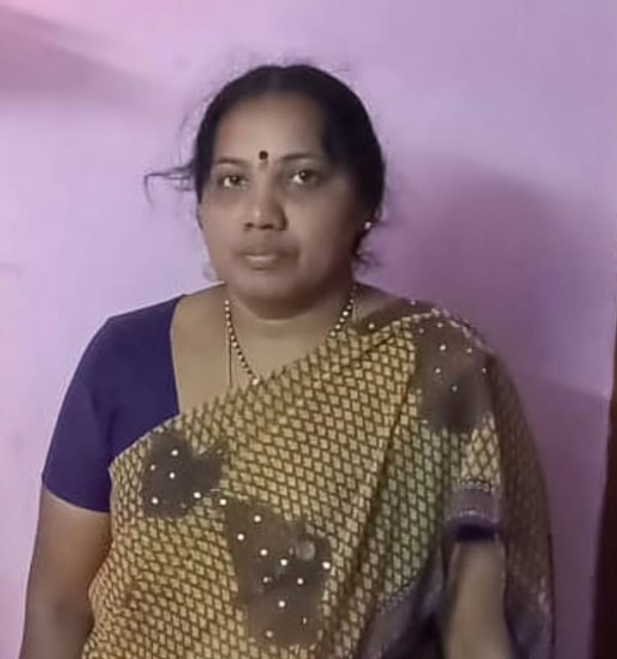
In the town of Prashant in Kolar district lives a woman named Gowri Bai. At 48 years old, she exudes a spirit of determination that refuses to wane with age. “I want to keep learning and growing,” she says. Once a schoolteacher, Gowri now depends on rental income for her financial stability. She lives with her husband and son.
She has been associated with Buzz women since 2021, after she completed the Self-Shakti/financial literacy and Spoorthi Fellowship/leadership training. She completed the Buzz Green/ecological initiatives in 2022. She then came to complete the Buzz Vyapar / entrepreneurship program in January 2025. And now has completed the final program at Buzz, the Nagarika Sakhi/Civic Engagement program in March 2025.
In the first module of the Nagarika Sakhi program, she resonated with a character named Akkamma , who inspired community-driven solutions. Gowri identified two main issues: the filthy drainage that contributed to health problems and the lack of functioning streetlights. In the second module, she learned how to go about solving the problems that inspired her to take action.
Initially discouraged by her husband and government inaction on her single-handed attempts, she re-tried through the power of collective effort. Gowri states, ‘I realised that we have to work together to make a change.’ She mobilised women from her self-help group. ‘If we come together, we can solve our problems,’ she encouraged. In January 2025, they submitted a written petition, prepared by Gowribai and signed by the 10 women, to the local councillor to clean the drainage system. The counsellor assured them of the necessary action. In February 2025, their efforts paid off, resulting in a clean and healthier environment. By May 2025, she and the group of women collectively tackled the street light issue. “Our locality is cleaner and brighter now,” she reflected.
Gowri took further steps to ensure her community prospered. She actively guides women in obtaining necessary documents like ration cards, aadhar cards and certificates for old-age pensions because she realises while these documents are necessary, there isn’t necessarily an accessible way of getting these documents.
Her action towards social change isn’t restricted to her abilities as a Nagarika Sakhi. From the learnings of the Buzz Green program, she has grown a few plants in the limited space of her house compound to encourage the habit of planting trees. She has also reduced plastic usage and now uses cloth bags. After the Vyapar program, she is ready to take on her next project – producing homemade cloth pads for menstruation management, aiming to promote both health awareness and environmental sustainability. Her goal is to reduce reliance on plastic sanitary products that are harmful to the environment while starting her own business. She envisions starting off by the end of 2025.
‘This is just the beginning; I want to take on each cause that arises,’ she states with determination. Gowribai truly does it all!


This woman is ‘driving’ change in her community
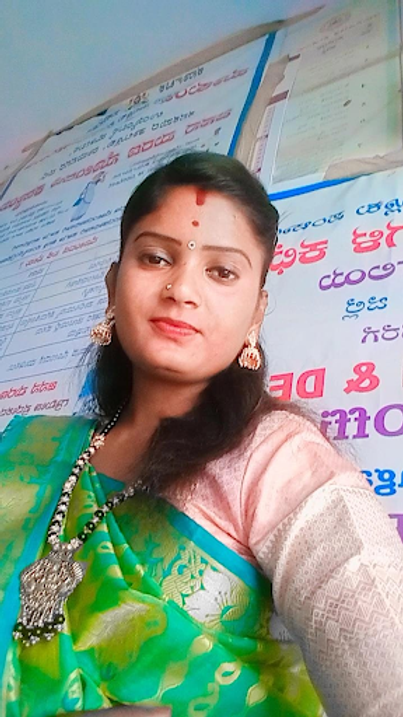
Asha, a community participant, has taken our tagline ‘driving progress’ quite literally and we couldn’t be more in awe!
Asha is from Hukunda village, Ramanagara district, and is a 25-year-old woman who completed 10th grade. She lives with her husband Rajesh, their three children, two nieces, two nephews, and her parents. Despite the challenges of supporting a family of ten on a limited income, Asha was determined to create a better life for them. Rajesh works at a petrol station and does construction work to make ends meet.
Asha started the Spoorthi Fellowship in October 2023. By December 2023, Asha had completed the third module, which focused on the concept of a model village. This module inspired her deeply, “I want to take a step towards creating a model village,” Asha said. ‘My first step in creating a model village is taking up the Swachh Bharat Mission and bringing it to my surrounding villages.’
Motivated by this vision, in March 2024, she took on a significant role as a driver for the Ramanagara City Municipal Council garbage vehicle. Her job involves driving the vehicle to 11 surrounding villages to collect and dispose of garbage, earning Rs.7,000 per month. Despite societal stigma surrounding this job, she accepted it wholeheartedly. She enrolled in a driving course at Canara Bank Institute, known for vocational training programs, after securing the job.
Asha’s commitment to her community was evident in her daily routine. She balanced her household chores, with her job, which required her to drive from 10 AM to 5 PM. Despite the long hours, she returned home each day with a sense of satisfaction, knowing that she was contributing to the cleanliness and well-being of her community. ‘I am proud to be one of the many women in my Panchayat who have taken up a job as a woman driver in disposing of garbage,’ Asha said. Asha’s work involves more than just driving the garbage vehicle. She actively educates the villagers about the importance of segregating waste and ensuring proper disposal.
Rajesh’s unwavering support played a crucial role in Asha’s journey. ‘He supports me in every way possible,’ Asha said. ‘He is very proud that I am setting an example of keeping our surroundings clean and the environment healthy .’ With the additional income from her job, Asha’s household transitioned from a single-income to a dual-income family. This financial stability allowed them to move forward with their plans to build a new house and save Rs. 500 per month in a Post Office scheme for their children’s education. ‘Now, I am more confident of building the house a little sooner than planned,’ Asha said. ‘I also aim to save further to educate my children.’
Asha lives up to the meaning of her name – hope. She inspires everyone by demonstrating that a better world awaits us when we make an effort to conserve our environment.
